An internet meme is a concept that spreads from person to person via the internet. An internet meme may take the form, hyperlink, video, picture, website or hashtag.
Wednesday, 15 May 2013
Wednesday, 1 May 2013
postmodern media essay
1.How do postmodern media differ from other media?
Postmodern media displays several diverse features than differ it from regular types of media. Intertextuality, Intertexual references are scattered throughout films, directors take inspiration from other texts previously used for example Tarantino has taken a lot of inspiration for certain scenes in throughout his films (such as inglorious Basterds and kill bill) from spaghetti western films, we can see this from the way he sets up scenes and shots such the tension building using a ‘standoff’ type set up, another way he decides the link to the genre is the soundtrack that can also be heard in the bar scene this scene is based around typical spaghetti westerns, As well as inglorious Basterds Drive also plays as homage to the spaghetti western genre, this can be recognised because ‘the kid’ barely speaks throughout the film, and this also is tension building for the film.
Another intertexual reference in film can be seen in the flm Kill Bill (vol.1), Kill bill is an action thriller film again written and directed by Tarantino, the film plays homage to other films such as old Japanese martial arts films, the way that kill bill differs from these films is the use of hyper reality and self-reflexivity, the martial arts scenes aren’t realistic and challenge typical convention of martial arts films, it also challenges gender roles by using a dominant female in the fights scenes.
Intertexuality in music, a lot of modern artists recognise different texts and reference them throughout their albums and songs, David Bowie creates his own individual identities for his singles and albums for example, ‘The rise and fall of ziggy stardust’ tell the story of his alter ego. This is a postmodern trait because he is creating new characters and pushing boundaries between what’s real and hypereal. Merging of genres in music, David Bowie is known for mixing genres and changing his music style per album. Another way artist can be considered postmodern is how they invent their image for example Madonna takes a lot of style inspiration from Marylin Monroe
Hyper reality in film, films such as Tarantino’s inglorious Basterds which is primarily a war film when you compare films such as this with other war films like saving private Ryan you can see how the postmodern approach has been taken with the film, hyper reality is used throughout the whole film and reinvents a different way to showcase a war film which therefore makes the whole film postmodern because its crossing different boundaries regarding the genre of the film. Scenes in saving Private Ryan paint a realistic and hard picture of war compared to the light-hearted approach and vast amounts of dialogue that tarantino has used, another postmodern element is the distortion of time and space, the film is set during the war yet modern features have been incorporated.
Postmodern media is produced for literate audiences to recognise and understand, With postmodern media artists and directors push the boundaries and typical conventions of film and music regarding structures such as genre, You can recognise the difference from postmodern media and other media, in postmodern media features are placed or used for a purpose, references are taken to create new and individual media.
Applying Genre
Daniel Chandler (2001) - the word genre comes from the French (and originally Latin) word for ‘type. The term is widely used in literary theory, media theory to refer to a distinctive type of ‘text’.
Steve Neale (1980) declares that “genres are instances of repetition and difference” – it is essential for genres to deviate occasionally in order to attract and engage audiences.
Which genre is your text?
Music video – which genre category is it? Performance, illustrative or disjuncture? (Andrew Goodwin)
Which generic conventions have you applied?
Pleasure of genre for audiences• Rick Altman (1999) argues that genre offers audiences ‘a set of pleasures’.
Emotional Pleasures: The emotional pleasures offered toaudiences of genre films are particularly significant when they generate a strong audience response.
Visceral Pleasures: Visceral pleasures are ‘gut’ responses andare defined by how the film’s stylistic construction elicits aphysical effect upon its audience. This can be a feeling ofrevulsion, kinetic speed, or a ‘roller coaster ride’.
Intellectual Puzzles: Certain film genres such as the thrilleroffer the pleasure in trying to unravel a mysteryor a puzzle. Pleasure is derived from deciphering the plot andforecasting the end or the being surprised by the unexpected.
•Which set of pleasures does your genre offer?
In terms of your coursework...• How we define a genre depends on ourpurposes (Chandler, 2001).• What was your purpose and the medium?
• Your audience and the industry sector youwere working within will have defined whatyou understood as the genre and sub-genreof the texts you created.
Genres are not fixed. They constantly changeand evolve over time.David Buckingham (1993) argues that genre is not... Simply "given" by the culture:rather, it is in a constant process of negotiation and change’.
Steve Neale (1980) declares that “genres are instances of repetition and difference” – it is essential for genres to deviate occasionally in order to attract and engage audiences.
Which genre is your text?
Music video – which genre category is it? Performance, illustrative or disjuncture? (Andrew Goodwin)
Which generic conventions have you applied?
- Genre of our music video is dance/pop
- the video would probably fall into the performance technique because it matches the music but doesnt tell a story..
- generic conventions applied- lip syncing, dancing, camera shots (close up, mid shot, panning), bright colours.
Pleasure of genre for audiences• Rick Altman (1999) argues that genre offers audiences ‘a set of pleasures’.
Emotional Pleasures: The emotional pleasures offered toaudiences of genre films are particularly significant when they generate a strong audience response.
Visceral Pleasures: Visceral pleasures are ‘gut’ responses andare defined by how the film’s stylistic construction elicits aphysical effect upon its audience. This can be a feeling ofrevulsion, kinetic speed, or a ‘roller coaster ride’.
Intellectual Puzzles: Certain film genres such as the thrilleroffer the pleasure in trying to unravel a mysteryor a puzzle. Pleasure is derived from deciphering the plot andforecasting the end or the being surprised by the unexpected.
•Which set of pleasures does your genre offer?
In terms of your coursework...• How we define a genre depends on ourpurposes (Chandler, 2001).• What was your purpose and the medium?
• Your audience and the industry sector youwere working within will have defined whatyou understood as the genre and sub-genreof the texts you created.
Genres are not fixed. They constantly changeand evolve over time.David Buckingham (1993) argues that genre is not... Simply "given" by the culture:rather, it is in a constant process of negotiation and change’.
Monday, 29 April 2013
representation
Think of this question as the first part of your revision...
“Representations in media texts are often simplistic and reinforce dominant ideologies so that audiences can make sense of them”. Evaluate the ways that you have used/challenged simplistic representations in one of the media products you have produced.
who, what, where
how, stereotypes, theories
why, audience
INTRO- refer to quote, agree/ disagree
refer to question, introduce coursework
MAIN BODY- go through different representations used
and stereotypes
and theories
around 4/5
(who- male + female, age group- target audience age, costume- simple young laid back, what- dancing/ smiling not taking themselves to seriously)
CONCLUSION- sum everything up
refer to question
“Representations in media texts are often simplistic and reinforce dominant ideologies so that audiences can make sense of them”. Evaluate the ways that you have used/challenged simplistic representations in one of the media products you have produced.
who, what, where
how, stereotypes, theories
why, audience
INTRO- refer to quote, agree/ disagree
refer to question, introduce coursework
MAIN BODY- go through different representations used
and stereotypes
and theories
around 4/5
(who- male + female, age group- target audience age, costume- simple young laid back, what- dancing/ smiling not taking themselves to seriously)
CONCLUSION- sum everything up
refer to question
Representation texts from powerpoint
You will be able to describe what representation is.• Be able to identify the types of groups that are represented? You will be able to discuss representation in your products
The media does not represent and construct reality, but instead represents it?
Representation - Definition• How the media shows us things about society – but this is through careful mediation. Hence re-presentation.• For representation to be meaningful to audiences there needs to be a shared recognition of people, situations, ideas etc.• All representations therefore have ideologies behind them.
Certain paradigms are encoded into texts and others are left out in order to give a preferred representation (Levi – Strauss, 1958).
Representing is about constructing reality, it is supposed to contain versimilitued and simplify people’s understanding of life.• Representation refers to the construction in any medium (especially the mass media) of aspects of �reality� such as people, places, objects, events, cultural identities and other abstract concepts
Such representations may be in speech or writing as well as still or moving pictures.• The term refers to the processes involved as well as to its products. For instance, in relation to the key markers of identity - Class, Age, Gender and Ethnicity (the cage of identity) - representation involves not only how identities are represented (or rather constructed) within the text but also how they are constructed in the processes of production and reception by people whose identities are also differentially marked in relation to such demographic factors.
Consider, for instance, the issue of the gaze. How do men look at images of women, women at men, men at men and women at women?
Richard Dyer (1983) posed a few questions when analysing media representations in general.
• 1. What sense of the world is it making?• 2. What does it imply? Is it typical of the world or deviant?• 3. Who is it speaking to? For whom? To whom?• 4. What does it represent to us and why? How do we respond to the representation?
How do you think the following groups are represented in the media?Types of people:
• Class • Age • Gender • Ethnicity • Sexuality • Disability
Theories• Particularly in relation to film – objectification of women’s bodies in the media has been a constant theme.• Laura Mulvey (1975) argues that the dominant point of view is masculine. The female body is displayed for the male gaze in order to provide erotic pleasure for the male (vouyerism). Women are therefore objectified by the camera lens and whatever gender the spectator/audience is positioned to accept the masculine POV.
John Berger ‘Ways Of Seeing’ (1972)“Men act and women appear”. “Men look at women. Women watch themselves being looked at”.“Women are aware of being seen by a male spectator”
Jib Fowles (1996) “in advertising, males gaze and females are gazed at”.
Paul Messaris (1997) “female models addressed to women....appear to imply a male point of view”.• In terms of magazine covers of women,
Janice Winship (1987) has been an extremely influential theorist. “The gaze between cover model and women readers marks the complicity between women seeing themselves in the image masculine culture has defined”.
Jean-Francois Lyotard (1984) and Jean Baudrillard (1980) share the belief that the idea of ‘truth’ needs to be deconstructed so that dominant ideas (that Lyotard argues are “grand narratives”) can be challenged.
Baudrillard discussed the concept of hyperreality – we inhabit a society that is no longer made up of any original thing for a sign to represent – it is the sign that is now the meaning. He argued that we live in a society of simulacra – simulations of reality that replace the real. Remember Disneyland?
Merrin (2005) argues that “the media do not reflect and represent reality but instead produce it, employing this simulation to justify their own continuing existence”.
David Gilmore• Man the protector• Man the provider• Man the impregnator
We often judge a text’s realism against our own ‘situated culture’. What is ‘real’ can therefore become subjective.• Stereotypes can be used to enhance realism - a news programme, documentary, film text etc about football hooligans, for e.g, will all use very conventional images that are associated with the realism that audiences will identify with such as shots of football grounds, public houses etc.
Stereotypes?• O’Sullivan et al (1998) details that a stereotype is a label that involves a process of categorisation and evaluation.• We can call stereotypes shorthand to narratives because such simplistic representations define our understanding of media texts – e.g we know who is good and who is evil.
First coined by Walter Lippmann (1956) the word stereotype wasn’t meant to be negative and was simply meant as a shortcut or ordering process.• In ideological terms, stereotyping is a means by which support is provided by one group’s differential against another.
Orrin E. Klapps (1962) distinction between stereotypes and social types is helpful.• Klapp defines social types as representations of those who belong to society.• They are the kinds of people that one expects, and is led to expect, to find in ones society, whereas stereotypes are those who do not belong, who are outside of ones society.
Richard Dyer (1977) suggests Klapp’s distinction can be reworked in terms of the types produced by different social groups according to their sense of who belongs and who doesnt, who is in and who is not
Tessa Perkins (1979) says, however, that stereotyping is not a simple process. She identified that some of the many ways that stereotypes are assumed to operate aren’t true.• They aren’t always negative (French good cooks)• They aren’t always about minority groups or those less powerful (upper class twits)• They are not always false – supported by empirical evidence.• They are not always rigid and unchanging. Perkins argues that if stereotypes were always so simple then they would not work culturally and over time. Martin Barker (1989) - stereotypes are condemned for misrepresenting the ‘real world’. (e.g. Reinforcing that the (false) stereotype that women are available for sex at any time) . He also says stereotypes are condemned for being too close to real world (e.g. showing women in home servicing men, which many still do).• Bears out Perkins’ point that for stereotypes to work they need audience recognition.
The media does not represent and construct reality, but instead represents it?
Representation - Definition• How the media shows us things about society – but this is through careful mediation. Hence re-presentation.• For representation to be meaningful to audiences there needs to be a shared recognition of people, situations, ideas etc.• All representations therefore have ideologies behind them.
Certain paradigms are encoded into texts and others are left out in order to give a preferred representation (Levi – Strauss, 1958).
Representing is about constructing reality, it is supposed to contain versimilitued and simplify people’s understanding of life.• Representation refers to the construction in any medium (especially the mass media) of aspects of �reality� such as people, places, objects, events, cultural identities and other abstract concepts
Such representations may be in speech or writing as well as still or moving pictures.• The term refers to the processes involved as well as to its products. For instance, in relation to the key markers of identity - Class, Age, Gender and Ethnicity (the cage of identity) - representation involves not only how identities are represented (or rather constructed) within the text but also how they are constructed in the processes of production and reception by people whose identities are also differentially marked in relation to such demographic factors.
Consider, for instance, the issue of the gaze. How do men look at images of women, women at men, men at men and women at women?
Richard Dyer (1983) posed a few questions when analysing media representations in general.
• 1. What sense of the world is it making?• 2. What does it imply? Is it typical of the world or deviant?• 3. Who is it speaking to? For whom? To whom?• 4. What does it represent to us and why? How do we respond to the representation?
How do you think the following groups are represented in the media?Types of people:
• Class • Age • Gender • Ethnicity • Sexuality • Disability
Theories• Particularly in relation to film – objectification of women’s bodies in the media has been a constant theme.• Laura Mulvey (1975) argues that the dominant point of view is masculine. The female body is displayed for the male gaze in order to provide erotic pleasure for the male (vouyerism). Women are therefore objectified by the camera lens and whatever gender the spectator/audience is positioned to accept the masculine POV.
John Berger ‘Ways Of Seeing’ (1972)“Men act and women appear”. “Men look at women. Women watch themselves being looked at”.“Women are aware of being seen by a male spectator”
Jib Fowles (1996) “in advertising, males gaze and females are gazed at”.
Paul Messaris (1997) “female models addressed to women....appear to imply a male point of view”.• In terms of magazine covers of women,
Janice Winship (1987) has been an extremely influential theorist. “The gaze between cover model and women readers marks the complicity between women seeing themselves in the image masculine culture has defined”.
Jean-Francois Lyotard (1984) and Jean Baudrillard (1980) share the belief that the idea of ‘truth’ needs to be deconstructed so that dominant ideas (that Lyotard argues are “grand narratives”) can be challenged.
Baudrillard discussed the concept of hyperreality – we inhabit a society that is no longer made up of any original thing for a sign to represent – it is the sign that is now the meaning. He argued that we live in a society of simulacra – simulations of reality that replace the real. Remember Disneyland?
Merrin (2005) argues that “the media do not reflect and represent reality but instead produce it, employing this simulation to justify their own continuing existence”.
David Gilmore• Man the protector• Man the provider• Man the impregnator
We often judge a text’s realism against our own ‘situated culture’. What is ‘real’ can therefore become subjective.• Stereotypes can be used to enhance realism - a news programme, documentary, film text etc about football hooligans, for e.g, will all use very conventional images that are associated with the realism that audiences will identify with such as shots of football grounds, public houses etc.
Stereotypes?• O’Sullivan et al (1998) details that a stereotype is a label that involves a process of categorisation and evaluation.• We can call stereotypes shorthand to narratives because such simplistic representations define our understanding of media texts – e.g we know who is good and who is evil.
First coined by Walter Lippmann (1956) the word stereotype wasn’t meant to be negative and was simply meant as a shortcut or ordering process.• In ideological terms, stereotyping is a means by which support is provided by one group’s differential against another.
Orrin E. Klapps (1962) distinction between stereotypes and social types is helpful.• Klapp defines social types as representations of those who belong to society.• They are the kinds of people that one expects, and is led to expect, to find in ones society, whereas stereotypes are those who do not belong, who are outside of ones society.
Richard Dyer (1977) suggests Klapp’s distinction can be reworked in terms of the types produced by different social groups according to their sense of who belongs and who doesnt, who is in and who is not
Tessa Perkins (1979) says, however, that stereotyping is not a simple process. She identified that some of the many ways that stereotypes are assumed to operate aren’t true.• They aren’t always negative (French good cooks)• They aren’t always about minority groups or those less powerful (upper class twits)• They are not always false – supported by empirical evidence.• They are not always rigid and unchanging. Perkins argues that if stereotypes were always so simple then they would not work culturally and over time. Martin Barker (1989) - stereotypes are condemned for misrepresenting the ‘real world’. (e.g. Reinforcing that the (false) stereotype that women are available for sex at any time) . He also says stereotypes are condemned for being too close to real world (e.g. showing women in home servicing men, which many still do).• Bears out Perkins’ point that for stereotypes to work they need audience recognition.
Wednesday, 17 April 2013
Audience theories
Is your text popular for a mass audience?
Julian McDougall (2009) suggests that in the online age it is getting harder to conceive a media audience as a stable, identifiable group.
Most dance music would be classed targeting a Niche / Alternative audience
We wanted the our audience to lean more towards a mass audience and although the song is ad dance genre it was very popular when released and has a fun pop twist but when the video and band was created we realised it perhaps leaned more towards a niche/ alternative audience.
Wednesday, 10 April 2013
Media language Theory
Connotation of our music video= Dj mixer (fun, party lively)
Charles Sanders Pierce (1931)
–there are three types of sign that we use every day to createmeaning; iconic, indexical and symbolic signs.
•Icon/iconic
: a mode in which the signifier is perceived as
resembling
or imitating thesignified (recognizably looking, sounding, feeling, tasting or smelling like it) - being similar inpossessing some of its qualities: e.g. a portrait, a cartoon, a scale-model, onomatopoeia,metaphors, 'realistic' sounds in 'programme music', sound effects in radio drama, a dubbedfilm soundtrack, imitative gestures.
•Index/indexical
: a mode in which the signifier is
directly connected
in some way (physicallyor causally) to the signified - this link can be observed or inferred: e.g. 'natural signs' (smoke,thunder, footprints, echoes, non-synthetic odours and flavours), medical symptoms (pain, arash, pulse-rate), measuring instruments (weathercock, thermometer, clock, spirit-level).
•Symbol/symbolic
: a mode in which the signifier does not resemble the signified but which isfundamentally arbitrary or purely conventional - so that the relationship must be learnt: e.g.language in general (plus specific languages, alphabetical letters, punctuation marks, words,phrases and sentences), numbers, morse code, traffic lights, national flags.
media language
Evaluate your coursework in relation to a media concept.
MEDIA LANGUAGE
MEDIA LANGUAGE
Camera=
Different shots.. Mainly mid shot’s used (female artist), close up’s (dj mixer), long shots (dj against background), camera panning (slow point in the song), zooming in and out (dj mixer).
Still and central framing (as the female artist sings and dances), Two shot (shot with the male and female together)
Editing=
Controlling speed (speeding up and slowing down areas), cuts (cutting between shots), reversing and replaying (reversing/ fast forwarding different shots and replaying them- dj), lip-syncing (female artist is mouthing the words), contrast of the shots (altering colour and brightness of shots).
Lighting=
Disco lights (disco lights were used in the background), screen (the screen projected different colours and flashing lights).
Sound=
Dance song- yeahyeahyeah’s- heads will roll (remix)
Synchronous (matches the action- dance track and the artist dancing/lively)
Diegetic sound (dj is used and lip-syncing female)
Tempo (fast tempo)
Mise- en-scene=
Location (screens, background)
Style (casual dress sense, simple, young)
Casting (teenage, attractive, normal)
Monday, 8 April 2013
Theories
MALE GAZE
In her 1975 essay "Visual Pleasure and Narrative Cinema", Laura Mulvey introduced the second-wave feminist concept of "male gaze" as a feature of gender power asymmetry in film.
The concept was present in earlier studies of the gaze, but it was Mulvey who brought it to the forefront. Mulvey stated that women were objectified in film because heterosexual men were in control of the camera.
The male gaze occurs when the camera puts the audience into the perspective of a heterosexual man. It may linger over the curves of a woman's body, for instance.
The woman is usually displayed on two different levels: as an erotic object for both the characters within the film, as well as the spectator who is watching the film.
The man emerges as the dominant power within the created film fantasy. The woman is passive to the active gaze from the man. This adds an element of 'patriarchal' order.
FACIAL EXPRESSIONS Marjorie Ferguson (1980) identified four types of facial expression in the cover photos of British women’s magazines:
In a study of advertisements in women’s magazines, Trevor Millum offers these categories of female expressions:
In her 1975 essay "Visual Pleasure and Narrative Cinema", Laura Mulvey introduced the second-wave feminist concept of "male gaze" as a feature of gender power asymmetry in film.
The concept was present in earlier studies of the gaze, but it was Mulvey who brought it to the forefront. Mulvey stated that women were objectified in film because heterosexual men were in control of the camera.
The male gaze occurs when the camera puts the audience into the perspective of a heterosexual man. It may linger over the curves of a woman's body, for instance.
The woman is usually displayed on two different levels: as an erotic object for both the characters within the film, as well as the spectator who is watching the film.
The man emerges as the dominant power within the created film fantasy. The woman is passive to the active gaze from the man. This adds an element of 'patriarchal' order.
FACIAL EXPRESSIONS Marjorie Ferguson (1980) identified four types of facial expression in the cover photos of British women’s magazines:
- Chocolate Box: half or full-smile, lips together or slightly parted, teeth barely visible, full or three-quarter face to camera. Projected mood: blandly pleasing, warm bath warmth, where uniformity of features in their smooth perfection is devoid of uniqueness or of individuality.
- Invitational: emphasis on the eyes, mouth shut or with only a hint of a smile, head to one side or looking back to camera. Projected mood: suggestive of mischief or mystery, the hint of contact potential rather than sexual promise, the cover equivalent of advertising’s soft sell.
- Super-smiler: full face, wide open toothy smile, head thrust forward or chin thrown back, hair often wind-blown. Projected mood: aggressive, ‘look-at-me’ demanding, the hard sell, ‘big come-on’ approach.
- Romantic or Sexual: a fourth and more general classification devised to include male and female ‘two-somes’; or the dreamy, heavy-lidded, unsmiling big-heads, or the overtly sensual or sexual. Projected moods: possible ‘available’ and definitely ‘available’.
In a study of advertisements in women’s magazines, Trevor Millum offers these categories of female expressions:
- Soft/introverted: eyes often shut or half-closed, the mouth slightly open/pouting, rarely smiling; an inward-looking trance-like reverie, removed from earthly things.
- Cool/level: indifferent, self-sufficient, arrogant, slightly insolent, haughty, aloof, confident, reserved; wide eyes, full lips straight or slightly parted, and obtrusive hair, often blonde. The eyes usually look the reader in the eye, as perhaps the woman regards herself in the mirror.
- Seductive: similar to the cool/level look in many respects - the eyes are less wide, perhaps shaded, the expression is less reserved but still self-sufficient and confident; milder versions may include a slight smile.
- Narcissistic: similarities to the cool/level and soft/introverted looks, rather closer to the latter: a satisfied smile, closed or half-closed eyes, self-enclosed, oblivious, content - ‘activity directed inward’.
- Carefree: nymphlike, active, healthy, gay, vibrant, outdoor girl; long unrestrained outward-flowing hair, more outward-going than the above, often smiling or grinning.
- Kittenlike: coy, naïve (perhaps in a deliberate, studied way), a friendlier and more girlish version of the cool/level look, sometimes almost twee.
- Maternal: motherly, matronly, mature, wise, experienced and kind, carrying a sort of authority; shorter hair, slight smile and gentle eyes - mouth may sometimes be stern, but eyes twinkle.
- Practical: concentrating, engaged on the business in hand, mouth closed, eyes object-directed, sometimes a slight frown; hair often short or tied back.
- Comic: deliberately ridiculous, exaggerated, acting the fool, pulling faces for the benefit of a real or imaginary audience, sometimes close to a sort of archness.
- Catalogue: a neutral look as of a dummy, artificial, waxlike; features may be in any position, but most likely to be with eyes open wide and a smile, but the look remains vacant and empty; personality has been removed. (Millum 1975, 97-8)
Tuesday, 12 March 2013
digital technology essay
Describe how you developed your skills in the use of digital technology for media production and evaluate how these skills contributed to your creative decision making. Refer to a range of examples in your answer to show how these skills developed over time.
I am going to discuss how I think that digital technology during our media production meant we were able to make different creative decisions and produce our AS and A2 coursework pieces. For AS we were asked to produce a preliminary school magazine to practice and get to grips with the digital media, we were then asked to produce a music magazine, contents page and double page spread. For A2 we were asked to complete a preliminary exercise as a class by recording our own copy of the music video for Busted ‘what I go to school for’, we then had to produce a music video of our own, we had to choose the song, artists, styling etc and produce a realistic video.
Before starting the course I had never attempted to use as complicated a program as Photoshop to edit and alter images and text so at AS level it was completely new to me, so only improvement could be made. Since then I have learnt various skills such as cutting images, creating layers and adding text, I have learnt all this from practicing and experimenting with the different tools available on Photoshop and would now say that I am skilled in the program and have been able to create two magazine covers, contents page, double page spread, advert and digipak using digital technology.
For our AS coursework to create a music magazine we had to create style and take the photographs ourselves. I looked on websites such as ‘coverjunkie’ and ‘dafont’ to gain inspiration, On the cover of my music magazine (MUSIQ) I used inspiration from other magazines and used a very similar text to various ‘pop’ magazine covers and copied the text layout around the image I used a standard Digital camera to take the images this was fine for what I wanted and produced decent clear images that I could edit using Photoshop after, For our A2 coursework being to produce a music video we upgraded to a more capable and specialised HD Panasonic video camera this allowed us to take risks and try new things when recording.
On the preliminary exercise for our A2 work we created as a class filmed busted ‘what I go to school for’ at this stage we had basic knowledge of recording and editing film, we put the clips together using I movie, by then learning how to use imovie we then were able to move ontp a more advanced program for our A2 music video and edited our video on the macs using the software final cut pro.
Skills we used on final cut pro were syncing the clips to the music making sure the lip syncing matched, cutting and shortening clips so the video flowed, slowing clips down in the slower areas of the song and speeding them up in the dance areas, we also edited clips by replaying and rewinding them to add to the dance/ dj effect we wanted to create. We added different effects to the black and white sections in the video adding contrast to the image so they in keep with the eye catching and ‘popping’ out of the screen appearance we wanted to carry threw, for this we used an effect on final cut called ‘alien lab’. We made the decision to create a twitter feed and linked it onto our blog this meant it created a brand for our artists.
Throughout both of my portfolios I sued blogger to document the processes I was carrying out, this was extremely helpful to me because it’s meant that I could compare my work and track my progress, you can see the improvement from AS to A2 on my blog by the amount of post and detail I have included during production stages.
To conclude after I had grasped the idea of Photoshop it then meant I was able to expand my creative ideas and make more efficient decisions in the production of my media products, Digital technology permitted me to develop and enhance my skills over AS and A2 to create unique and original ideas, this permitted me to showcase all my knowledge and developed skills to produce a professional and technology looking final media piece.
Monday, 11 March 2013
David bowie post modern
David Bowie could be considered post modern because of the way he has created an identity for himself.
David Bowie's imperial period (1970-1980) is often cited as a breakthrough of post-modern ideas into popular music.
Musical genres, the vast range of lyrical influences, the endless jumble of subject matter.
He once described himself as a musical xerox machine and a pseudo-intellectual, someone who doesn't innovate himself but recombines other people's innovations.
intertextuality references in songs
David Bowie's imperial period (1970-1980) is often cited as a breakthrough of post-modern ideas into popular music.
Musical genres, the vast range of lyrical influences, the endless jumble of subject matter.
He once described himself as a musical xerox machine and a pseudo-intellectual, someone who doesn't innovate himself but recombines other people's innovations.
intertextuality references in songs
David Bowie 'The next day'
'The Next Day' will be Bowie's first album of new material in ten years since 2003.
After having already shocked fans with the news of a new album on his birthday, he then again surprised them with a free streaming of the album via iTunes days before its official release

The Next Day is the twenty-fourth studio album by English musician David Bowie
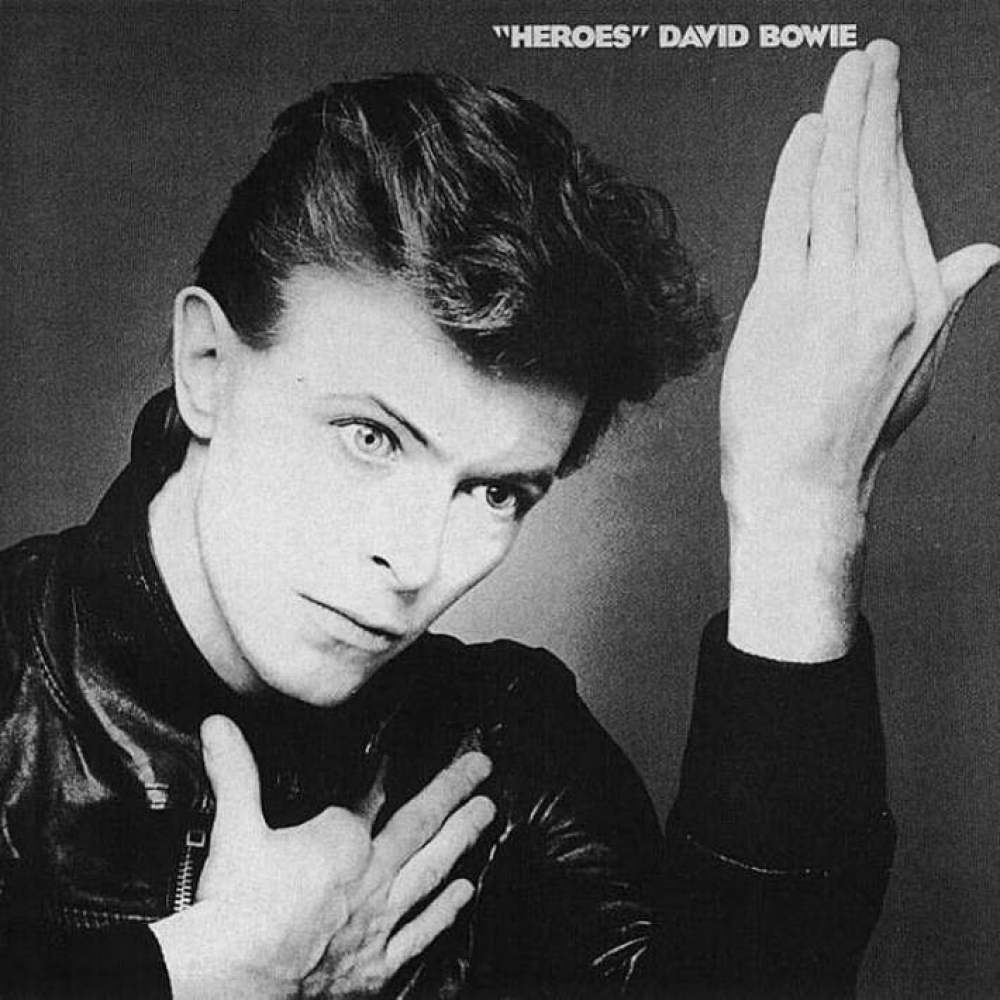
The cover art for the album is an adapted version of Bowie's 1977 album, "Heroes"(the cover below)
This is an example of bricoloage, taking something existing and altering it to become something new.
No guest artists were used to record the album, although Bowie did use some of the musicians he's worked with in the past, including Earl Slick, who recorded his parts for the album in July 2012.
Gail Ann Dorsey (bass guitar) and Sterling Campbell (drums), who have both worked with Bowie since the 90s, also contributed to the album
background of david bowie
- David Robert Jones (born 8 January 1947)
- known by his stage name David Bowie
- English musician, actor, record producer and arranger
- Bowie has been a major figure in the world of popular music for over four decades, and is renowned as an innovator, particularly for his work in the 1970s.
- He is known for his distinctive voice as well as the intellectual depth and eclecticism of his work.
- He is also known for having a different theme/genre for every album.
Monday, 4 March 2013
Notes on pomo in DRIVE
Hero -
Antihero elements, Getaway driver, Saves the girl but is the bad guy/ brutal killer, Psycho rage
Fairy-tale elements
Characters expected - hero, villain, princess, Fighting ‘bad guys’, Following on a journey , The villains are killed
Non fairy-tale elements
The ending- they don’t end up together, Nothing noble about the style of fighting , Violence in the film, Gruesome but believable in places, Range of weapons
The city (setting) LA
Not many people around , In driving scenes roads seem empty, References to grand theft auto in certain shots of the city
Music
Soundtrack, 80’s music , Italian opera song ( doesnt fit the scene) , ‘hero’ song towards the end, Romantic music in the lift- self reflexitive (elevator lights change which shows it’s a film)
Ending
Not satisfactory ending for viewers , He doesn’t take the money or get the girl, Audience wanted it to be more conclusive
Dialogue
Wednesday, 27 February 2013
Monday, 25 February 2013
Digital technology
What did the image manipulation program allow you to manipulate?
When creating my music magazine Photoshop allowed me to successfully edit my images, cut them out, creating a plain background, insert text, created a masthead by cropping out the letters and inserting them, and inserted a magazine interview that I wrote.
What crop tools did you use?
When creating my music magazine Photoshop allowed me to successfully edit my images, cut them out, creating a plain background, insert text, created a masthead by cropping out the letters and inserting them, and inserted a magazine interview that I wrote.
What crop tools did you use?
Image editor (contrast, brightness), red eye tool, lasso tool to crop out the artist and then feathered the edges so the image cutting didn’t appear too harsh.
What tools did you use to match your fonts to act as part of the mode of address?
I chose the fonts because I felt they were quirky and different but also simple so it address’s the audience directly, I wanted the masthead to be bold and fun to appeal to the ‘poppy’ genre.
How did you use Photoshop to aid your house style?
I used Photoshop to create my style of the magazine, for the cover i used short quotes of texts and placed them bunched together, Photoshop helped me alter the size of the text and rotate areas of the text around. I repeated the masthead throughout the pages to make them all link together, I carried the black and white simple approach through all them but then added elements of orange.
How did you manipulate photographs?
I editing the photographs I have taken by altering the brightness and contrast to create a clearer and sharper picture which would stand out more.
Explain how using layers helped organise your work and construct your cover?
Using layers helped to keep everything in an order, on the front cover it meant that things were easier to change, alter and edit because layers could be taken out and put in.
Explain how you created your dps?
For the right hand side of my double page spread I wanted to include an image of my artist so that came before the text, I used a bold eye-catching image of my artist to compliment the orange colour them I have running through. For the left hand side I found a font I thought would look realistic for the logo for my artist, I then inserted this in the format of a masthead for the page, I wrote the article/interview on word to check spelling and then inserted it in in columns, I changed the questions to orange to keep the them and make it more fun and poppy, I then took a pull quote from the interview to add a bit of my artists personality to the page.
using conventions essay
How has your understanding of real media conventions developed over the past two years?
For our AS media studies coursework we were asked to produce our own music magazine, for the magazine we were asked to create a cover a contents page and a double page spread with an article/ interview that we have written ourselves. I chose to aim my magazine at the age group 15-25 and used the pop genre to them my magazine. For our a2 coursework we were asked to create a music video in a pair, group or on our own. We were also asked to produce on our own a digipak and magazine advert for and promoting the artist or bands album to collaborate and create a brand for our band. We created a band called intoxicated with the music being dance genre we chose to aim it approximately at ages 16-25.
During my AS project I followed typical conventions that I researched from magazines, some of the conventions included a Masthead on the cover- I have used a bold masthead on the cover of my magazine to grab attention and create a brand, I also repeated this through the pages. I also used Photographs- I have created and used images of my artist on the cover and throughout the contents and double page spread; this gives her a believable identity. Ive included Pull quotes- I have used a pull quotes of my double page spread page this gives the artist a personality straight away and the reader an idea before they’ve read, I used ‘Quirky is my middle name’.
We were asked to create a music video in a pair, group or on our own. We were also asked to produce on our own a digipak and magazine advert for and promoting the artist or bands album, we researched videos for similar genres and looked at what we think works well, conventions we followed for the music video were Lip syncing- we showed several shots of the female artist lip syncing on different backgrounds using different style shots eg. Close up. Props- we included props such as the dj deck for our male member of the band, this creates a more realistic view. We used a Location- coloured backgrounds on a screen this is appropriate to the genre and style of music.
I used conventions in the ancillary texts such as including the Website- on both my digipak and advert I included the website name for the band and their twitter feed, this makes it more personal and believable. Compared to AS level work I have developed my understanding of what conventions are and have learnt how to apply conventions to make my work appear professional.
For the music magazine I challenged conventions such as the way my artist was positioned, I wanted her to look current and cool so wanted to include a unique pose to pop on the front cover. However I chose to follow typical conventions such as including the masthead at the top of the page and text around my image. For the music video we chose to challenge a lot of conventions, we chose to keep one location but change the colour, this was risky because it might mean you lose interest half way through but I think it works really well, we followed typical conventions by including shots of one band member lip syncing towards the camera, this is seen a lot in music videos.
Understanding the conventions used in texts made it more successful to apply them correctly so they work, my knowledge on typical conventions used helped with decision making because it meant I knew more about what decisions I needed to make. My understanding of conventions has been advanced since AS level, I have learnt more conventions and how to apply them effectively in my work. For our A2 work on the digipak and advert I had more of an idea on what the typical conventions were which meant I was able to create more of a convincing piece of work.
Conventions are vital in tasks such as these, without conventions there would be no way to recognise what works well on texts and what to include, being able to follow, understand and develop conventions using my own ideas means my projects are produced to the best of my ability.
Subscribe to:
Posts (Atom)